Labor Day: A Time to Honor the American Worker
Labor Day is Sept. 7 this year. Bob Sweeney writes that it should be more than another three-day holiday.
Bob Sweeney ·
Labor Day is Sept. 7 this year, a time to salute and honor the labor force of the United States.
It should be more than another three-day holiday. It should be a time to remember the millions of Americans, past and present, who have worked hard to build this great country.
America was built by people who worked.
From the earliest days of the colonies, Americans have been farmers, craftsmen, miners, railroad workers, lumberjacks, ranchers, factory workers, truck drivers, nurses, teachers, construction workers and thousands of others who got up every morning and went to work.
The pioneers who moved west didn’t have an easy life. They cleared land, planted crops, built homes, raised families, cut timber and built communities. Railroad workers laid tracks across a continent. Miners went underground looking for gold, silver and coal. Farmers worked from daylight to dark.
America’s prosperity came largely from people willing to work hard, take risks and build something better for themselves and their families.
We should also remember that America’s history includes the terrible institution of slavery, in which millions of people were forced to work without freedom or compensation. That is a painful part of our history, but it is part of the story of American labor and the long struggle for freedom.
As America moved westward, work and opportunity followed.
The California Gold Rush began after gold was discovered in 1848, bringing thousands of people west in search of opportunity. Then, in 1859, gold was discovered in the Black Hawk and Central City area of Colorado, helping launch Colorado’s great Gold Rush.
The Weekly Register-Call was there to record that history. It began publishing in 1862, when Colorado was still a territory and mining was transforming the mountains.
Gilpin County became a mining center filled with people willing to work hard and take risks in search of a better life. Gold and silver mining was dangerous, difficult work.
Men went underground every day facing risks that are difficult for us to imagine today.
That tradition of hard work is still part of Colorado.
I grew up in Craig, where coal mining became an important part of the community. We had major power plants and many coal miners. Some mining was underground, while much of the later mining was surface mining.
I also know something about hard physical labor because I started working in the hay fields when I was about 8 years old. I drove a stacker team of horses and continued working in the hay fields for years.
That was simply what our family did. We worked from sunup to sundown. My father worked seven days a week, year after year, running our ranch.
At an early age, I learned a strong work ethic, and it has remained part of my family ever since.
That work ethic followed me into the newspaper business.
Producing newspapers is hard work. The news doesn’t stop, so our job doesn’t stop. Newspapers operate around the clock, seven days a week, because events don’t wait for Monday morning.
My entire family has worked hard at this business for decades. That has been one of the keys to whatever success our newspapers have achieved. We have never been afraid of hard work, and we have always admired people who aren’t afraid of it either.
In many ways, we are part of the labor force ourselves. Producing a newspaper is a form of manufacturing. There are people gathering the news, selling advertising, designing pages, handling circulation, printing the paper and getting it into the hands of readers.
It takes a lot of work, and it never really stops.
That is one reason I have such sympathy and respect for working people. I understand what it means to labor hard and consistently to produce something people depend upon.
But America’s labor history has not always been peaceful.
One of the darkest chapters in Colorado history occurred at Ludlow in 1914.
Coal miners in southern Colorado went on strike in September 1913. The miners and their families were forced out of company housing and lived in tent colonies on the open prairie. After months of tension and conflict, fighting broke out at the Ludlow tent colony on April 20, 1914. By the time the violence ended, miners, women and children were among the dead.
It became known as the Ludlow Massacre. The United Mine Workers later built a monument at the site to honor the victims.
It was a terrible reminder of what can happen when labor disputes become so bitter that people stop seeing one another as human beings.
The history of American labor continued to develop after Ludlow. One of the most powerful figures in that history was John L. Lewis, the long-time leader of the United Mine Workers of America.
I admired Lewis because he stood up for coal miners and believed working people deserved decent wages, safe working conditions and a voice in their workplace.
I have always believed labor deserves to be respected and protected. People who work hard deserve to be paid fairly.
I also had an opportunity to see how another country viewed labor.
In 1975, I was one of 13 American journalists selected for a six-week goodwill tour of the Soviet Union. I saw a country very different from America.
One thing that struck me was the importance the Soviet system placed on certain industrial workers. I remember learning that lumberjacks and steel workers were among the better-paid workers, while professions such as doctors and journalists were not rewarded in the same way.
The Soviets placed great emphasis on the worker.
But there was something else I saw that made a lasting impression on me. I asked what happened if someone didn’t show up for work. I was told that somebody would come to make sure that person went to work.
That is a very different concept of labor from the American idea.
In America, work is supposed to be the choice of a free person.
That distinction matters.
We should support labor. We should support good wages and safe working conditions. We should respect unions when they represent their members honestly and responsibly.
But we should also remember that America’s great economic achievement came from the combination of labor, entrepreneurship, private investment, innovation and individual freedom.
Workers need employers, and employers need workers.
Neither can succeed for very long without the other.
Today, when I look around Colorado, I see people from all over the world doing hard work. I see immigrants working on roofs, in hospitals, in nursing homes, in restaurants, on farms and in construction.
Immigration and border enforcement are legitimate issues for our country to debate and resolve. But I can recognize hard work when I see it.
People come to America because they want something better. They want freedom. They want safety. They want an opportunity to work, raise their families and build a better future.
That opportunity is one of America’s greatest gifts.
We should never confuse support for working people with socialism or communism. Those systems have failed repeatedly to produce the freedom and prosperity Americans enjoy.
People around the world have risked everything to leave communist countries and come to free countries.
America has its problems. We have disagreements between labor and management. We have economic inequality. We have people who struggle.
But we also have something extraordinary: the freedom to work, the freedom to start a business, the freedom to join a union, the freedom to change jobs, the freedom to bargain and the freedom to build a better life.
So this Labor Day, let’s do more than enjoy the holiday.
Let’s remember the miners of Gilpin County. Let’s remember the men, women and children of Ludlow. Let’s remember John L. Lewis and the generations of labor leaders and working people who fought for better conditions.
And let’s salute today’s American worker — the person who gets up before daylight, goes to work, does the job and comes home tired at the end of the day.
America was built by people who worked.
That is something worth celebrating this Labor Day.
Print source: The Villager, Vol. 44 No. 41, Sept. 3, 2026, pages 4 and 5. The page 1 teaser called this Barbwire Bob’s Labor Day editorial. The byline on pages 4–5 is Bob Sweeney, publisher. The print page mixes the column with masthead copy; this draft follows the readable editorial text from the issue extract.
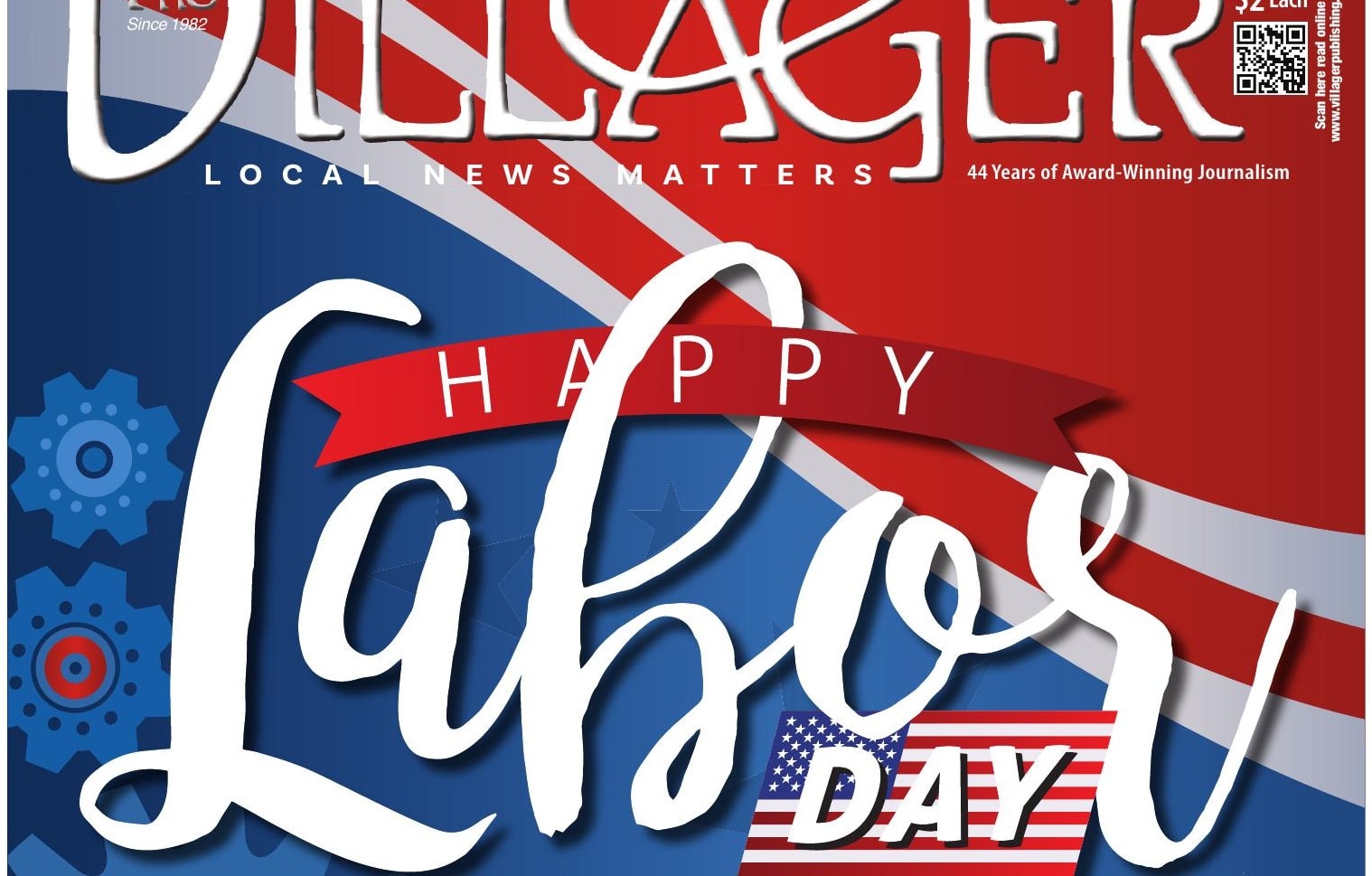
Print cover teaser crop from the Sept. 3 issue. The featured image is the full Labor Day cover with masthead. The source crop already clips the Labor script; it is not used as a second story’s hero.