Front Range Passenger Train from Fort Collins to Pueblo would serve 10 communities and require voter approval of a $0.33% sales tax for future phases
Freda Miklin reports the Colorado Connector passenger-train plan and a November sales-tax question printed as $0.33%, or 33 cents on every $100 spent.
Freda Miklin ·
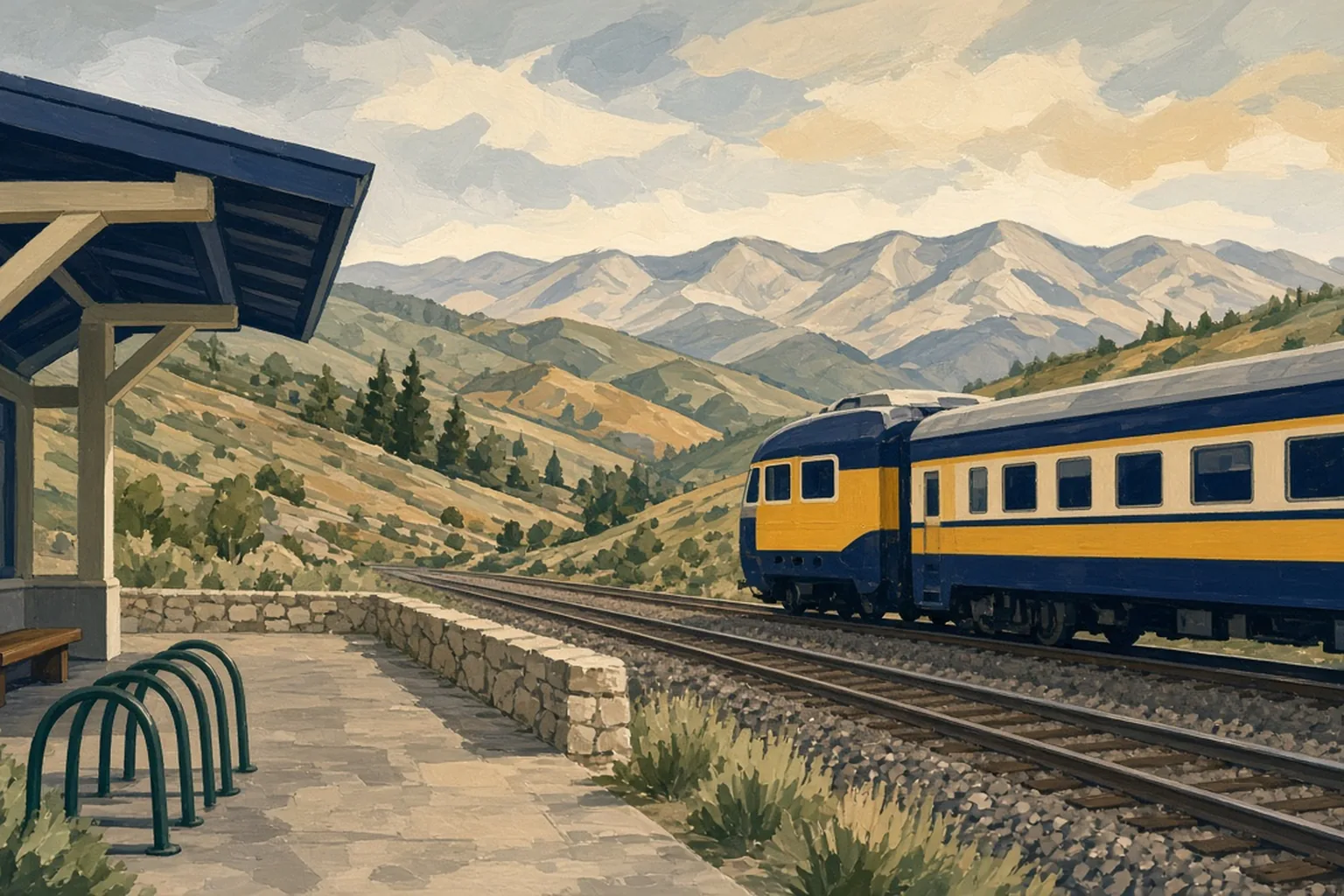
The Front Range Passenger Train, known as Colorado Connector, or CoCo, has been planned in phases so service can start sooner while advancing a long-term vision. The first of three core phases is already underway and will rely on existing funds and mostly existing tracks.
With zero new tax support, Phase 1 is scheduled to begin service in 2029 with three daily round trips between Fort Collins and Denver’s Union Station, funded by resources already in place. Stops in-between will include Loveland, Longmont, Boulder, Louisville, Broomfield, and Westminster.
In the November 3, 2026 election, the Front Range Passenger Rail (FRPR) District will ask voters in communities closest to permanent CoCo stations to approve a sales tax increase of $0.33%, which is 33 cents on every $100 spent. The tax is expected to produce annual revenue of $295 million.
Approval of the tax is needed for future phases. Phase 2, planned for 2032, would add two daily round trips south of Denver to Pueblo, with stops in Littleton, Sterling Ranch, North Colorado Springs, and Colorado Springs, while increasing Denver-to-Fort Collins service from three to four daily round trips.
Each CoCo station will include platforms, lighting, signage, canopies, security cameras, emergency call boxes, full ADA access, and any additional features chosen by individual communities.
Phases 3 through 5 are expected to unfold over roughly 20 years following Phase 2. Over time, they are intended to provide 10 daily round trips between Denver and Fort Collins, eight daily round trips between Denver and Pueblo, and future connections to Wyoming, Trinidad, and New Mexico.
The FRPR District is a public entity created by the State of Colorado. It is governed by a Board of Directors with 17 voting and 7 non-voting members. FRPR District, whose website is printed as frprdristrict.com, has spent years laying the groundwork for CoCo. Its planning efforts have secured more than $500,000 in federal funding for development, design, and planning.
CoCo has also reached the second step of the Federal Railroad Administration’s Corridor Identification and Development Program, making it one of the more advanced projects in the national pipeline and positioning it for potential additional federal funding.
FRPR District’s key partners—Colorado Department of Transportation (CDOT), RTD, Amtrak, Union Pacific Railroad, and BNSF Railway—have worked together for years to advance planning and design of CoCo. Each has helped bring the project to its current stage by providing unique assets, including in-place rails and technical experience in planning, ticketing, maintenance, crews, and federal safety compliance.
As intercity passenger rail, CoCo will differ from typical commuter trains by offering a spacious, comfortable interior with amenities for working, relaxing, and enjoying Colorado scenery along the route.
Advanced suspension, quiet propulsion, and enclosed connections between cars are planned to create a smooth, steady ride. Warm lighting, large windows, and climate control will offer a welcoming space that feels more like a getaway than a daily commute.
Trains will offer ample storage for luggage, bikes, and other gear passengers may need for business trips or leisure travel within Colorado. Wi-Fi, power outlets, and food and drink service are also planned, based on availability.
According to its impact analysis, CoCo will bring an economic return of $1 to $5 for every dollar invested and will create 50,000 jobs per $1 billion invested, 30%+ more than roads. Home values are predicted to rise 24% for properties near transit stations, while pollution will decline by 80%+ per trip versus driving. Households that can go down from two cars to one will save about $10,000 per year. Fares are expected to be comparable to Bustang and Winter Park Express prices.
The state law that created the Front Range Passenger Rail District was Senate Bill 21-238 in 2021. Senate Bill 24-184 Support Surface Transportation Infrastructure Development in 2024 moved it forward and made the first phase a reality.
For more information, go to coloradoconnector.com.
A print graphic caption in the same story called the map “the planned route of the Colorado Connection Front Range Passenger Train.”
Print source: The Villager, Vol. 44 No. 41, Sept. 3, 2026, page 6. The printed tax rate is “$0.33%, which is 33 cents on every $100 spent,” and the printed FRPR website is frprdristrict.com; both are kept as they appeared rather than corrected.